Protect Your People.
Stay Compliant. Every Year.
Height safety systems on commercial and industrial roofs must be installed correctly, maintained in working order, and re-certified by a competent person every 12 months — without exception. Ideal Asset Maintenance installs, upgrades, and re-certifies compliant height safety systems across NSW.
Three Services.
One Compliance Obligation.
SAFETY+ covers the full lifecycle of a commercial or industrial roof height safety system — from initial installation on a new or existing building, through to upgrades where a system no longer meets current standards, and the annual re-certification that every system requires by law.
Height safety is not a set-and-forget investment. Systems that are correctly installed but never re-certified gradually become a liability — physically, as components deteriorate and may fail under load, and legally, as each year without a current re-certification certificate represents a breach of the relevant SafeWork NSW obligations. If a fall incident occurs on a roof with an out-of-date or non-compliant system, the consequences for the responsible person or organisation are serious.
We install, upgrade, and re-certify all six major height safety system types — issuing a compliance certificate for each system inspected, and a written re-certification report with findings and recommendations after every attendance. Our team holds Cm3 safety certification and carries $20M public liability and $10M professional indemnity insurance — meeting the contractor compliance requirements of large asset owners and facility management teams before we set foot on the roof.
Annual Re-Certification — Legally Mandatory
All height safety systems must be re-certified by a competent person every 12 months under the SafeWork NSW Code of Practice for Managing the Risk of Falls at Workplaces. No exceptions, no extensions.
Compliance Certificate Issued
A compliance certificate and written re-certification report is issued after every inspection — documenting the system's current status, any findings, and rectification actions required to maintain compliance.
All Six System Types Covered
We install, upgrade, and re-certify static lines, anchor points, guardrails, safety mesh, roof ladder access systems, and walkway and grating systems — a single contractor for every height safety requirement on the roof.
Annual Reminder Included
We track re-certification due dates for every system we service and contact you ahead of the anniversary — so re-certification never falls through the cracks in a busy maintenance schedule.
What the Law Requires — and What Happens When It's Ignored
The SafeWork NSW Code of Practice for Managing the Risk of Falls at Workplaces requires that all installed height safety systems — anchor points, static lines, guardrails, safety mesh, and associated access systems — are inspected and re-certified by a competent person every 12 months.
This is not a recommendation. It is a legal requirement that applies to every commercial and industrial building where the roof is accessed for any purpose — maintenance, cleaning, equipment servicing, or emergency response.
The obligation sits with the person conducting a business or undertaking (PCBU) — typically the building owner, asset manager, or facility manager — not the contractor accessing the roof. If a worker is injured on a roof with an out-of-date or non-compliant height safety system, the PCBU is exposed to prosecution under the Work Health and Safety Act, regardless of whether the injured worker was their employee or a contractor.
Without a Current Re-Certification Certificate
Every person accessing the roof is working on a system of unknown integrity. Fittings degrade, anchors corrode, and static lines weaken — none of which is visible without a load test. An untested system provides no assurance it will hold under the load of a fall.
If an Incident Occurs Without Compliance
The PCBU faces prosecution under the Work Health and Safety Act, civil liability claims, and potential insurance complications — in addition to the human cost of the incident itself. The absence of a current re-certification certificate is evidence of a failure to meet the duty of care.
With a Current SAFETY+ Re-Certification
Every system has been load tested, inspected against current Australian Standards, and certified as compliant. You hold the documentation to demonstrate your duty of care has been met — and every person working at height on that roof is protected by a system confirmed to be in working order.
Four Common Situations — All Covered by SAFETY+
Height safety needs vary significantly from building to building. These are the four most common situations we're engaged to resolve.
No System in Place
Many existing commercial and industrial buildings were constructed before current height safety standards were established, or have had rooftop access requirements change as new equipment has been installed. If your building has no compliant height safety system and the roof is accessed for any purpose, you are in breach of the SafeWork NSW Code of Practice. We assess the roof access requirements, design the appropriate system, and install it correctly — with a compliance certificate issued on completion.
System Overdue for Re-Certification
The most common situation we encounter. Many buildings have a height safety system in place but no documented record of re-certification within the past 12 months — often because the obligation has simply been overlooked in a busy facilities management schedule, or because the previous contractor has not followed up. We attend, inspect and load test the existing system, issue a compliance certificate for each system that passes, and provide a report on any findings that require rectification.
System Needs Upgrade to Current Standards
Height safety standards and the SafeWork NSW Code of Practice are updated periodically — and systems installed under previous editions may no longer meet current requirements. Additionally, systems that were originally designed for a specific access pattern may no longer be adequate if rooftop equipment has been added or changed, requiring additional anchor points or extended static line coverage. We assess the existing system against current standards and scope the upgrade required to bring it into full compliance.
Post-Roof-Retrofit — New System Required
When a roof is replaced, re-sheeted, or significantly retrofitted, the existing height safety system must be removed during the works and reinstalled on completion — or replaced entirely if the roof configuration has changed. We coordinate the height safety scope of roof retrofit projects, ensuring the reinstalled or new system is correctly specified, properly installed into the new roof structure, and re-certified on completion of the project. This is included as a standard deliverable in all relevant RETROFIT projects we manage.
All Six Height Safety System Types — Installed, Upgraded & Re-Certified
A single contractor for every height safety system on your roof — no split responsibilities, no gaps in coverage.
Static Line Systems
Horizontal lifeline systems that allow workers to move freely across a roof while continuously connected to a fall-arrest system. Essential for roofs with regular maintenance access requirements. Static lines must be load tested and re-certified annually.
Anchor Points
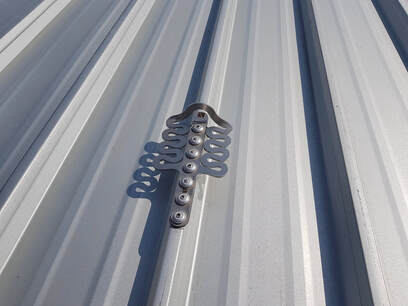
Single and multi-point anchor systems providing fixed attachment points for fall-arrest lanyards and work-positioning systems. Must be structurally rated, correctly installed into the roof structure, and load tested annually to confirm integrity.
Guardrails & Edge Protection
Permanent or temporary guardrail systems providing passive fall prevention at roof edges, skylights, and open sections. Guardrails are the highest level of fall protection and are required wherever practicable under the hierarchy of controls in the SafeWork NSW Code of Practice.
Safety Mesh
Below-skylight and fragile-surface safety mesh systems that prevent a person from falling through a skylight or fragile roof panel. A critical requirement in buildings with polycarbonate or fibreglass skylights that can become brittle and fail under load — particularly in older buildings.
Roof Ladder Access Systems
Fixed roof ladder systems providing safe, compliant access to the roof from ground level or intermediate levels — with appropriate fall-arrest provisions at the transition from ladder to roof surface. Correctly installed ladder systems reduce the risk of falls during the access phase, which is among the highest-risk moments of any roof work.
Walkway & Grating Systems
Dedicated walkway and grating systems that provide a safe, defined path across the roof to equipment requiring regular access — protecting both the roof surface from foot traffic damage and the worker from trip hazards and unstable surfaces. Particularly important on roofs with penetrations, equipment, and varying surface heights.
From Assessment to Compliance Certificate
A consistent process for every engagement — whether it's a new installation, an upgrade, or the annual re-certification your building requires by law.
On-Site Assessment
We assess your roof, existing systems, and access requirements against the current SafeWork NSW Code of Practice and relevant Australian Standards — and confirm what's needed to achieve or maintain compliance.
No cost, no obligationDesign & Scope
For new installations and upgrades, we produce a compliant system design and scope of works tailored to your roof configuration and access requirements — before any work begins.
Compliant design providedInstallation, Upgrade or Re-Certification
Works are completed by our licensed team to Australian Standards — including load testing of all anchor points and static lines. For re-certifications, we attend, inspect, and test the existing system on the same visit.
To Australian StandardsCertificate & Report Issued
A compliance certificate is issued for every system that passes inspection, together with a written report documenting all findings and any rectification actions required. We record your next due date and contact you ahead of it.
Documented for your recordsTrusted Across Major Commercial & Industrial Sites
A sample of height safety installation, upgrade, and re-certification work completed by Ideal Asset Maintenance across NSW.
Sydney Business Park
New height safety system installation across a large commercial business park facility, followed by annual re-certification — ensuring all anchor points, static lines, and access systems are load tested, compliant, and certified for safe rooftop access.
Moriah College
New height safety system installation across a large private school campus, followed by annual re-certification — providing compliant, documented rooftop access protection for a live educational environment with ongoing maintenance and cleaning requirements.
Kareena Private Hospital
Height safety system upgrade and reinstallation following a full roof replacement in a live hospital environment — ensuring the system met current standards on the new roof structure, with a compliance certificate issued on completion of the project.
When Was Your Height Safety System Last Re-Certified?
If you don't have a current re-certification certificate — dated within the last 12 months — your system is non-compliant and every person accessing your roof is at risk. Request a compliance check and we'll confirm your status and what's needed to get it right.